
The New Behavior Online
It’s happening now. More than twenty fascinating thinkers and doers have accepted our invitation to blog here. The group includes many names you know. And with an eye to the future, we have included some gifted new voices whose names you may not know. Not yet, that is. Check back here to see their new articles, front and center! Read More →
Read More Posts From Announcements
Featured Contributors
- Salman Akhtar
- Michael Carroll
- Ron Potter Efron
- Janina Fisher
- Diana Fosha
- Ron Frederick
- Robert Hill
- Dan Hughes
- Ned Hallowell
- Harville Hendrix
- Deborah Korn
- Karen Levine
- George McCloskey
- Pat Ogden
- Bev Patwell
- James Pretzer
- Brad Sachs
- Richard Schwartz
- Dan Short
- Flint Sparks
- Bessel van der Kolk
- Margaret Wehrenberg
- Amy Weintraub
- Kelly Wilson
Insight on Demand
 Although I do not consider insight to be the most important component in therapy, it can be very helpful when it occurs. I conduct therapy from a problem-solving perspective, which is based on the assumption that people will live happier more fulfilled lives when they are able to function as capable problem solvers. If you have attended any of my trainings, then you have probably... Read More →
Utilization: Concept #1
During a recent meeting of the Milton H. Erickson Institute of Phoenix, Marilia Baker turned to me and said, “Don’t you think that just as ‘suggestion’ is the golden rule of hypnosis, ‘utilization’ is the golden rule of Ericksonian hypnosis?” She then proposed that in Ericksonian hypnosis these two concepts are conjoined. Indeed, utilization itself is a suggestion that speaks to the individual’s value, to the worthiness of his or her life experiences, personal ideas, and the worthiness of one’s idiosyncratic behavior. Even more remarkably, utilization also... Read More →
The Most Important Skill in Therapy
If there is any single skill that might be used to summarize what the most effective Ericksonian therapists are able to do really well, it would be the general ability to connect with others in deep and compelling ways. Whether you are describing the therapist’s use of effective communication, interpersonal flexibility, skillful observation, or love and compassion, it all comes back to the therapist’s ability to form a meaningful connection with those who are otherwise lost or isolated in some problematic life-circumstance. Like explorers searching for a city of gold, many students of therapy are trying to learn special curative techniques. But the real treasure is found in the state of relationship that is... Read More →
The Trans-Mental and Trans-Temporal Problem Solver
I just recently delivered a talk at the 2016 Brief Therapy Conference in San Diego and made a promise to my audience that I would send a one page summary of the talk and attach a link to the slides, which can be found at my Can You Be Like Erickson?
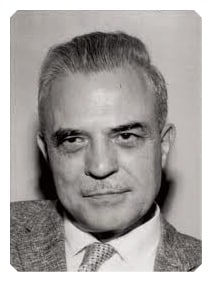 Milton H. Erickson, MD
For my keynote address at the Erickson Congress in Puerto Vallarta, I shared a memorable experience when... Read More →
Milton H. Erickson, MD
For my keynote address at the Erickson Congress in Puerto Vallarta, I shared a memorable experience when... Read More →
How Can a Busy Therapist Improve Their Skills in CBT?
I sometimes get questions from therapists who realize that their grad school training didn’t really equip them to use CBT under real-world conditions. With the personal and professional demands we all face it isn’t simple, but there are a number of good options for improving CBT skills once you’re in practice. . The first options that... Read More →
Why not fix all of your problems?
 During my earliest days of studying Milton Erickson’s work, there were many fascinating premises which I could not understand. One of these was his warning... Read More →
CBT in the Real World
In the past few months I’ve seen several comments about how CBT is “constrained” by treatment protocols. Apparently, some practitioners have the impression that CBT is “cookbook” approach where the therapist takes a manualized treatment protocol and imposes it on the client without tailoring it to the client’s needs. They seem to think that... Read More →
Let Me Sleep On It: CBT for Insomnia
The February, 2016 edition of Consumer Reports recommends CBT as an alternative to medication for chronic insomnia (see https://www.consumerreports.org/cro/magazine/2012/08/how-did-you-sleep-last-night/index.htm for some of what they say about insomnia).... Read More →
Read More Posts From General
A Conversation with Warren Bennis
 BOL: I hope our conversation will focus on the how-to of intervening in order to enhance the performance of organizations. You are a master of that art, but your most important work has focussed elsewhere: on understanding the nature of the organization,... Read More →
A Conversation with Henry Stein
 BOL: Alfred Adler’s name is better known to today’s therapists than are his ideas and methods. Your dedication to this body of work must be based on the belief that contemporary practice is diminished because Adler’s contributions are not... Read More →